
Tantrums and meltdowns
18 months – 12 years · 5 min read
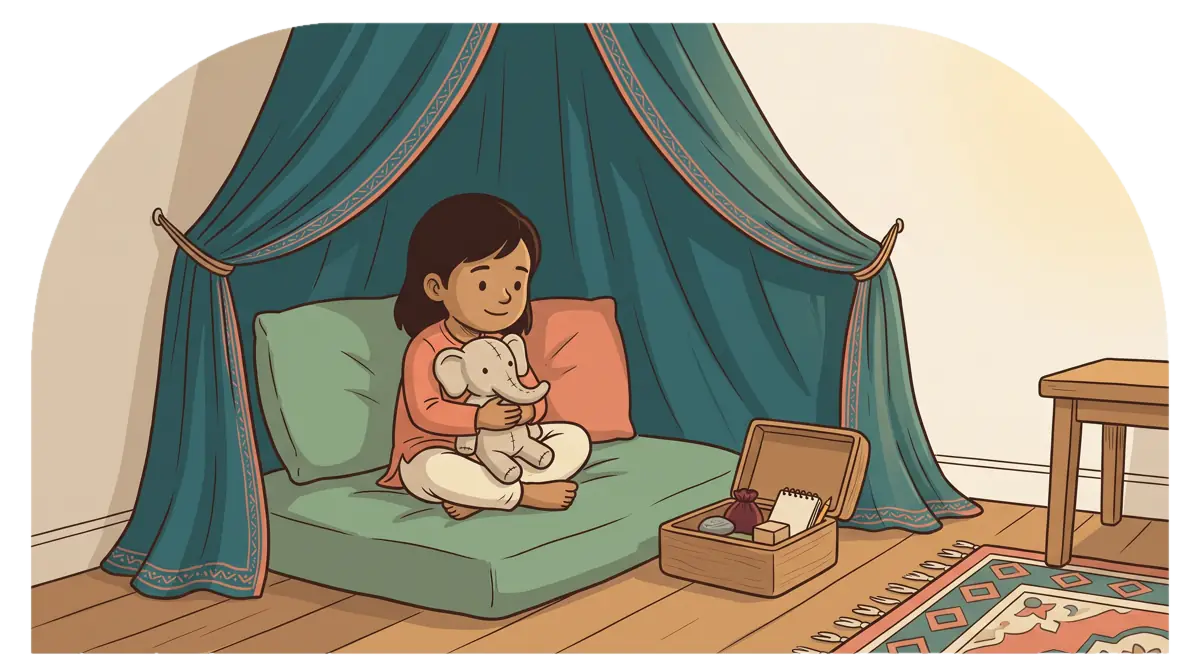
A tantrum is usually about wanting something, and it often eases when the child sees it won’t work. A meltdown is different: the child is overwhelmed (by noise, tiredness, change, or feelings) and has lost control. Meltdowns are not a choice, and they need calm, not consequences.
What parents often notice
- What happened just before? Hunger, tiredness, a “no”, turning off a screen, a change of plan, a noisy place.
- How big, and how long? Is it getting better or worse over the weeks?
- What helped it end? A quiet space, a hug, waiting, distraction?
What helps at home
- In the moment: stay close and calm, say little, keep them safe, and move them somewhere quieter if you can.
- Don’t reason or bargain during a meltdown; talk about it later, when everyone is calm.
- Warn before transitions (“Five more minutes, then shoes on”) and use a timer they can see.
- Keep meals and sleep regular; hunger and tiredness are behind many hard moments.
- Notice and praise calm moments, and teach one simple calming skill when they’re settled.
When to talk to a professional
- Outbursts are very frequent, very long, or dangerous to your child or others.
- They continue well past age 5 without easing, or come with other concerns about development.
Who can help
- Child psychologist
- Developmental paediatrician
- Occupational therapist (if sensory triggers)
Sources
- NHS, Temper tantrums
- American Academy of Pediatrics (HealthyChildren.org) Communication and discipline
Last updated 28 September 2026 · General information, not medical advice. It is not a diagnosis or a substitute for a qualified professional.