
Sensory differences
All ages · 5 min read
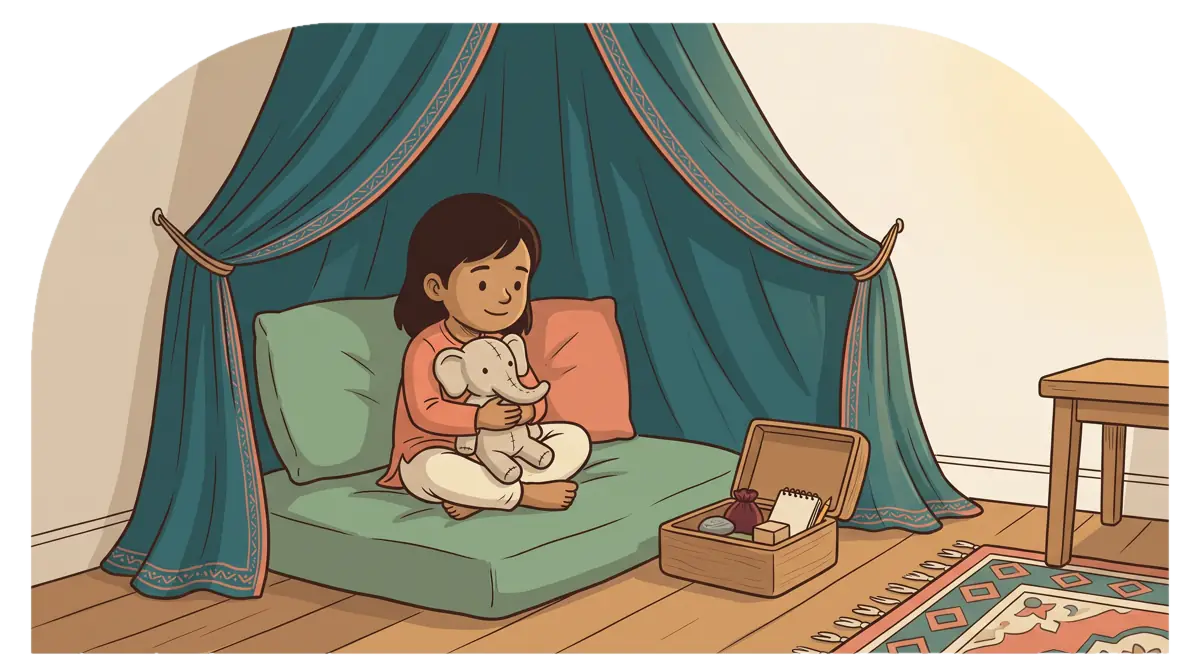
Children take in the world through their senses: sound, touch, taste, smell, sight, movement and body position. Some children feel certain sensations much more strongly than others (a tag in a shirt feels like sandpaper), and some much less (they crash, spin and seek strong pressure).
Sensory differences are common in autistic children and in children with ADHD, but can also happen on their own.
What parents often notice
- Covering ears at mixer-grinders, pressure cookers or crowds.
- Refusing certain clothes, hair-washing, nail-cutting, or foods with mixed textures.
- Constantly moving, jumping, spinning or chewing on things.
- Seeming not to notice when hurt, messy or called.
- Meltdowns in busy, noisy places like weddings, malls or markets.
What helps at home
- Notice patterns: what happened just before a hard moment? Plan around the triggers you find.
- Offer a calm corner with soft light and a cushion or blanket, and let them go there before things build up.
- Give movement breaks, jumping, carrying heavy bags, pushing a laundry basket, especially before tasks that need sitting.
- Warn before loud sounds, and let them wear ear defenders or headphones in noisy places.
- Introduce new textures and foods slowly, with no pressure.
When to talk to a professional
- Sensory reactions stop your child eating enough, sleeping, or joining everyday life.
- Meltdowns are frequent or intense.
Who can help
- Occupational therapist
- Developmental paediatrician
Sources
Last updated 28 September 2026 · General information, not medical advice. It is not a diagnosis or a substitute for a qualified professional.