
Speech and language delay
18 months – 6 years · 5 min read
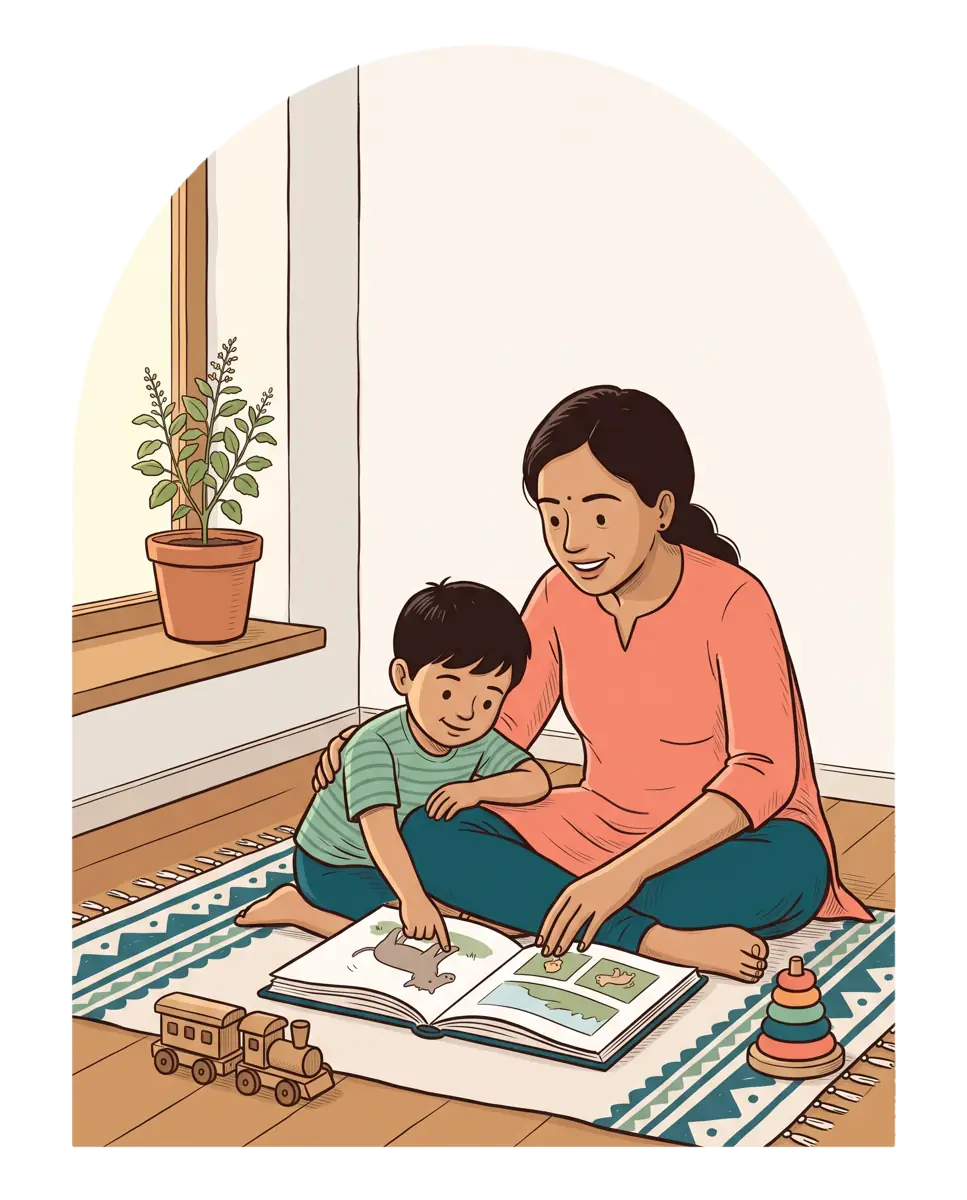
A speech and language delay means a child is understanding or using words later than most children of the same age. Speech is making sounds clearly; language is understanding and putting words together to share ideas. A child can have difficulty with one or both.
Some children catch up on their own. Others need help, and it is hard to tell which from the outside, so it is worth checking rather than waiting.
What parents often notice
- Few words by 18 months, or not joining two words together by 2 years.
- Pointing, pulling you or crying to ask for things, instead of trying words.
- Not following simple instructions like “bring your shoes” without gestures.
- Speech that family members outside the home cannot understand by around age 3.
- Frustration, tantrums or giving up when they are not understood.
What helps at home
- Talk about what your child is doing, as they do it: “You’re pouring. Pour, pour!”
- Add one word to what they say: if they say “car”, you say “red car” or “car go”.
- Get down to their eye level and wait, count to five in your head, to give them a turn.
- Sing rhymes with actions, read picture books, and turn screens off in the background.
- Speak your home language; it is the richest language you have to share.
Myths and facts
MythBoys always talk late; wait and see.
FactBoys may talk a little later on average, but a clear delay is worth checking in any child.
MythTwo languages at home cause late talking.
FactThey don’t. Bilingual children reach milestones in the usual range across their languages.
When to talk to a professional
- No words by 16 months, no two-word phrases by 2 years, or losing words at any age.
- Your child doesn’t seem to understand simple things said to them; have their hearing checked too.
Who can help
- Speech and language therapist
- Audiologist (hearing test)
- Developmental paediatrician
Sources
- ASHA; Speech and language development
- American Academy of Pediatrics (HealthyChildren.org) Language delay
Last updated 28 September 2026 · General information, not medical advice. It is not a diagnosis or a substitute for a qualified professional.