
Developmental delay and intellectual disability
All ages · 6 min read
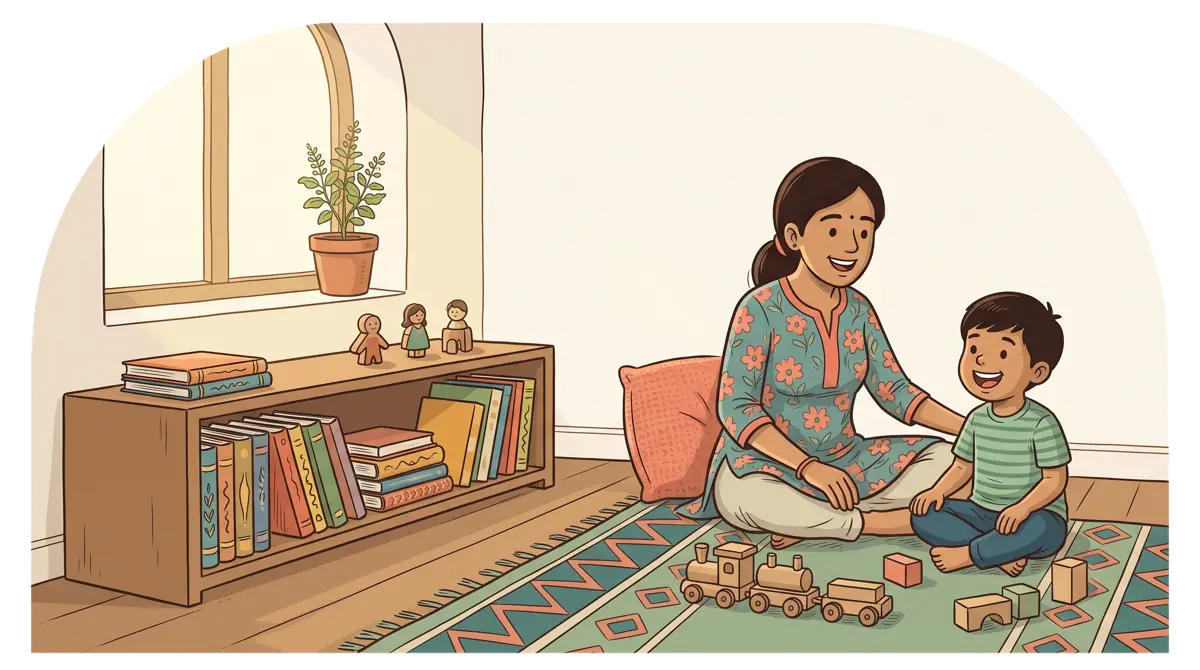
Developmental delay means a young child is reaching several milestones, sitting, walking, talking, playing, feeding themselves, later than most children. It describes where a child is now, not what they will become.
Intellectual disability is a term used when learning and everyday skills stay significantly behind over time, usually confirmed after age 5. Children with intellectual disability, including those with Down syndrome, keep learning and growing throughout life, especially with early support.
What parents often notice
- Milestones arriving noticeably later than for other children the same age, in more than one area.
- Needing more help than peers with feeding, dressing or toileting as they get older.
- Finding it harder to understand instructions, play pretend games, or keep up in play.
What helps at home
- Break everyday skills into tiny steps and practise one step at a time, many times, in the same order.
- Use routines (meals, bath, dressing) as learning time. They happen every day anyway.
- Show, then help, then step back: do it together, then let them do the last part themselves.
- Notice and celebrate small gains. Progress may be slower, but it is real.
Myths and facts
MythEarly help is pointless if they will be delayed anyway.
FactEarly support makes a real difference to independence and communication. It is never too early to start.
When to talk to a professional
- Your child is behind in two or more areas, or has lost skills they had.
- Any concern at all under age 3. This is when support helps most.
Who can help
- Developmental paediatrician
- Occupational therapist
- Physiotherapist
- Speech and language therapist
- Special educator
- Your nearest District Early Intervention Centre (DEIC)
Sources
- American Academy of Pediatrics (HealthyChildren.org) Developmental disabilities
- NHS, Learning disabilities
- Rashtriya Bal Swasthya Karyakram (Government of India)
Last updated 28 September 2026 · General information, not medical advice. It is not a diagnosis or a substitute for a qualified professional.