
Screen time
All ages · 4 min read
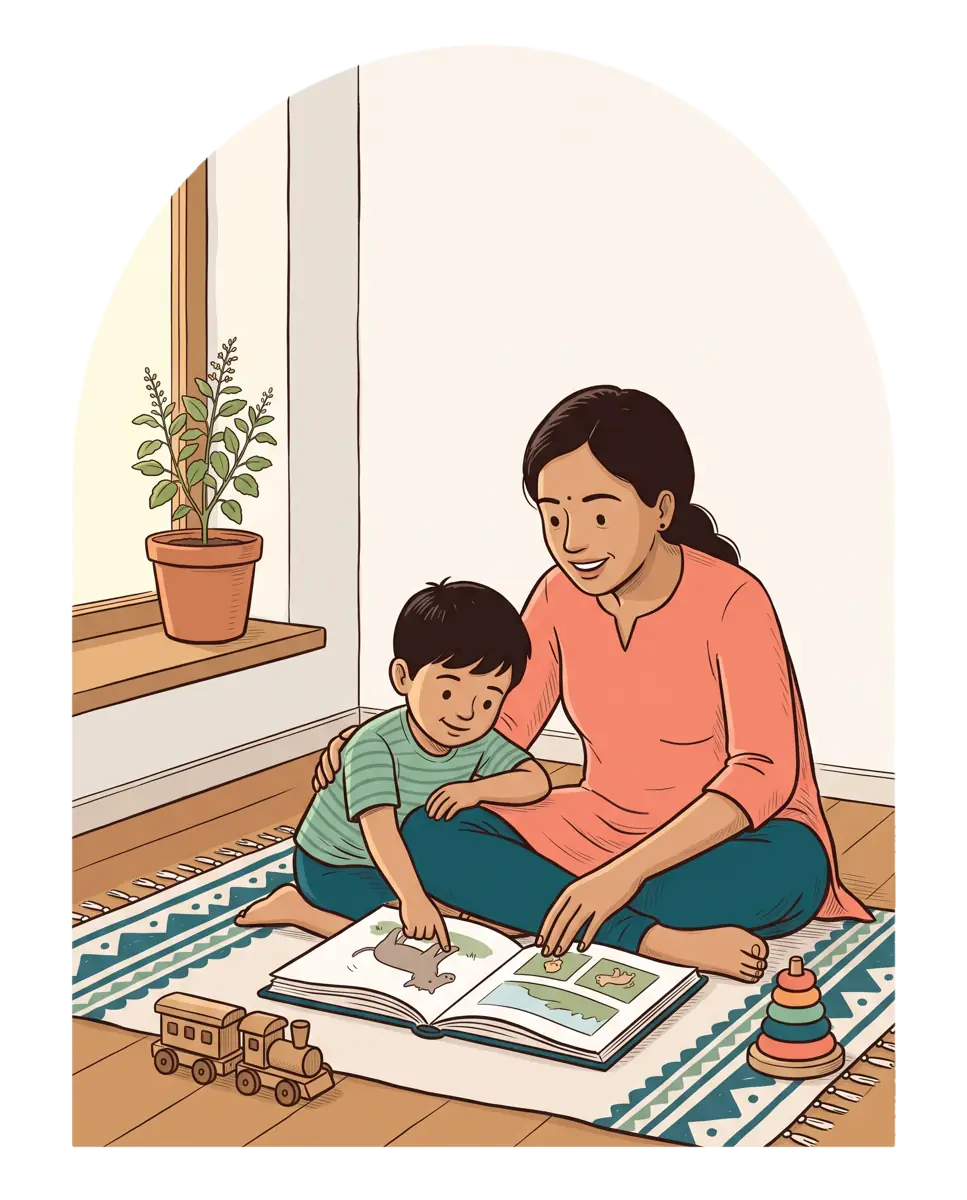
Screens are part of family life. What matters most is what screens replace, talking, play, sleep and moving, and whether an adult is watching and talking with the child.
The World Health Organization recommends no sedentary screen time for children under 2, and no more than 1 hour a day for 2- to 4-year-olds, less is better.
What helps at home
- Watch together and talk about what you see.
- Keep screens out of meals, bedrooms and the hour before bed.
- Replace screen time with something specific (“After lunch we play with blocks”) rather than just taking it away.
- Use a visual timer and warn before it ends. Expect protest the first week. It passes.
- Notice your own screen use around your child.
Myths and facts
MythEducational videos teach toddlers to talk.
FactYoung children learn language mainly from real back-and-forth with people, not from screens.
When to talk to a professional
- Screen time is causing serious conflict, sleep problems, or your child has no interest in anything else.
Who can help
- Paediatrician
- Child psychologist
Sources
- World Health Organization; Guidelines on physical activity, sedentary behaviour and sleep for children under 5
- American Academy of Pediatrics (HealthyChildren.org) Media
Last updated 28 September 2026 · General information, not medical advice. It is not a diagnosis or a substitute for a qualified professional.