Skip to content
Nurtureby ZenQuip
Home planHow it worksLearnTrustLog inBegin free child assessment
  • Conditions
  • Everyday behavioural problems
  • Guides for families
Learn/Guides for families

Raising a child with more than one language

18 months – 6 years · 4 min read
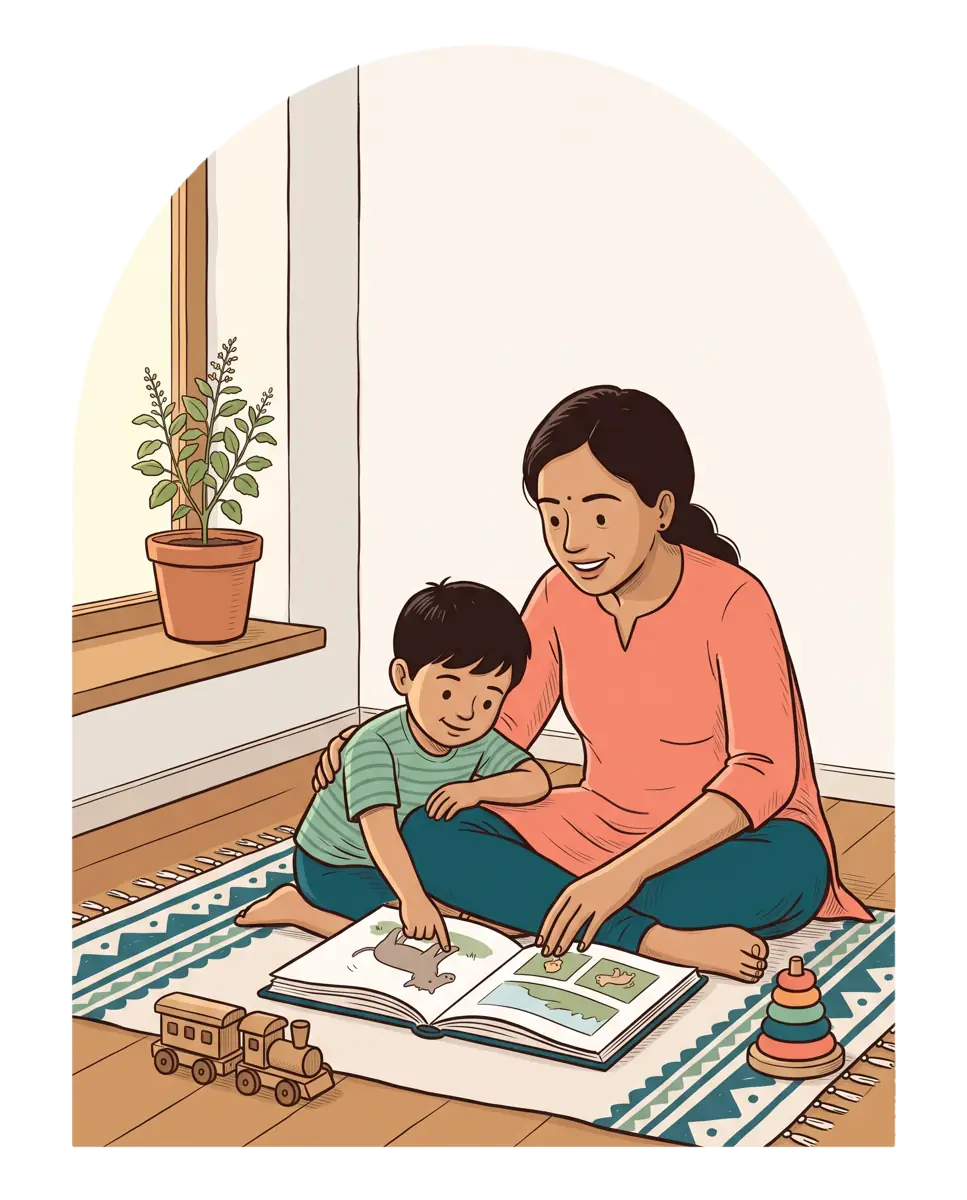
Many Indian children grow up hearing two, three or more languages. Families sometimes worry that this slows talking, and are told to speak just one. The evidence says otherwise.

What helps

  • Talk, sing and read in the language you speak best. Warm, natural conversation is what builds language.
  • Each person can stick to their own language, or families can mix. Either works.
  • Count all of your child’s languages together when you think about how many words they know.
  • Use stories, songs and rhymes from your own tradition. They are full of language.

When to ask a professional

  • Your child is not using single words by about 16 months, or two-word phrases by about 2 years, in any language.
  • They seem not to understand simple requests in any language.
  • They lose words they used to say.
  • Ask for a speech and language therapist who understands your home languages, or who can involve you in therapy in the language you speak.

Myths and facts

  • MythSpeaking more than one language at home causes speech delay.

    FactIt does not. Children can learn several languages at once. A real delay would show in all of their languages, and it needs a check-up whatever language is spoken.

  • MythWe should stop using our home language and use only English.

    FactKeep using the language you are most fluent in. Rich, natural talk in that language helps your child more than stumbling English.

Sources

  • American Speech-Language-Hearing Association

Last updated 28 September 2026 · General information, not medical advice. It is not a diagnosis or a substitute for a qualified professional.

How Nurture can help

The Nurture assessment asks about communication for your child’s age. Answer about how they communicate overall, in whichever languages they use.

Begin free child assessment

Related

  • Preparing for a developmental assessment→
  • Who’s who: the professionals who can help→
  • Milestones: what to expect and when to ask→

ZenQuip is a mental health support platform. It does not provide medical diagnoses and is not a substitute for evaluation or treatment by a qualified professional. If you are in crisis, call Tele-MANAS 14416 (or 1-800-891-4416) or KIRAN 1800-599-0019 or Vandrevala Foundation +91 9999 666 555 (India), or contact your local emergency services immediately.

View our crisis helplines reference (PDF)

Nurtureby ZenQuip

Children · Families · Experts, brighter tomorrows

Grievance Officer

Nurture

  • Home plan
  • How it works
  • FAQs

Learn

  • Conditions
  • Everyday behavioural problems
  • Guides for families

Trust

  • Trust & privacy
  • Pricing
  • Privacy policy
  • Terms of use
  • Refund policy
  • Request data removal (DPDPA)

Contact

  • support@zenquip.com
  • grievance@zenquip.com
  • +91 96540 06424

ZenQuip is a mental health support platform. It does not provide medical diagnoses and is not a substitute for evaluation or treatment by a qualified professional. If you are in crisis, call Tele-MANAS 14416 (or 1-800-891-4416) or KIRAN 1800-599-0019 or Vandrevala Foundation +91 9999 666 555 (India), or contact your local emergency services immediately.

View our crisis helplines reference (PDF)

© 2026 ZenQuip Healthcare Private Limited · CIN U86900RJ2026PTC115318

Nurture is part of the ZenQuip family · zenquip.com